Aim of the course:
The aim of this course is to equip VET practitioners and in-company trainers with practical methods and tools to design training activities that develop entrepreneurial skills specifically oriented toward sustainable business models. The course supports educators in moving from theory-based instruction to hands-on, experience-driven learning that enables learners to explore sustainability challenges, generate meaningful ideas, analyse user needs and build structured business concepts.
Through the use of key entrepreneurial tools (such as the Sustainable Business Model Canvas, the Value Proposition Canvas, stakeholder mapping and impact assessment) participants learn how to guide VET learners in understanding the complexity of green innovation. The course ultimately empowers educators to create learning experiences that promote responsible decision-making, systems thinking and the development of green entrepreneurial initiatives aligned with community needs and environmental priorities.
Main ideas:
- Sustainable entrepreneurship requires training activities that are concrete, contextualised and experience-based.
- Entrepreneurial tools such as SBMC and VPC help structure green ideas and ensure they address real user needs.
- Mapping stakeholders supports systems thinking and reveals collaboration opportunities within local ecosystems.
- Impact assessment helps learners evaluate environmental, social and economic consequences of their ideas.
- Effective training design enables learners to develop feasible, responsible and community-oriented sustainable business models.
Course Features
- Lectures 6
- Quizzes 2
- Duration 10 weeks
- Skill level All levels
- Language English
- Students 0
- Assessments Yes
- 3 Sections
- 6 Lessons
- 10 Weeks
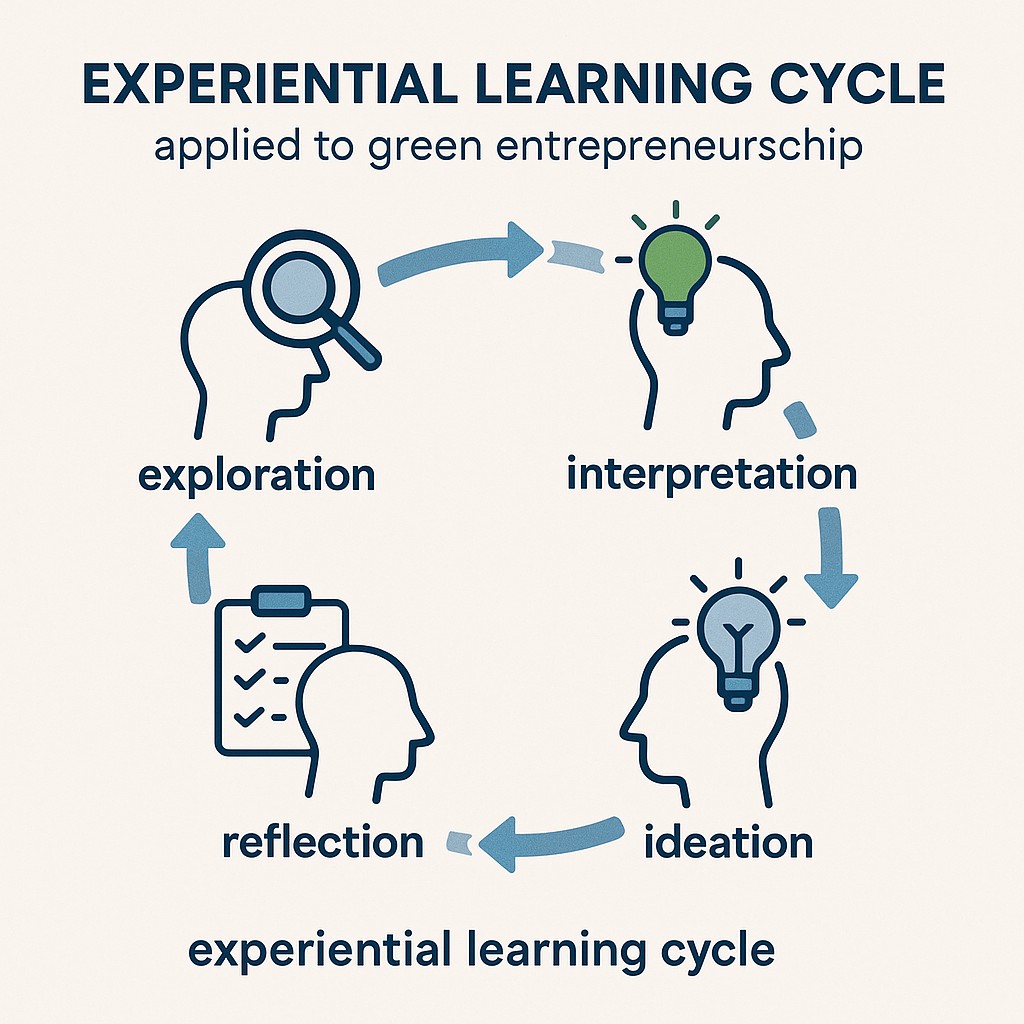
- Designing experiential learning for sustainable entrepreneurship2
- Training activities for developing sustainable entrepreneurial skills4
- To know more2